This page contains affiliate links. If you make a purchase through one, we may earn a commission at no extra cost to you.
A hundred-mile race-day kit is less about having everything and more about having exactly what you’ll actually use across twenty-plus hours on your feet.
The Non-Negotiables
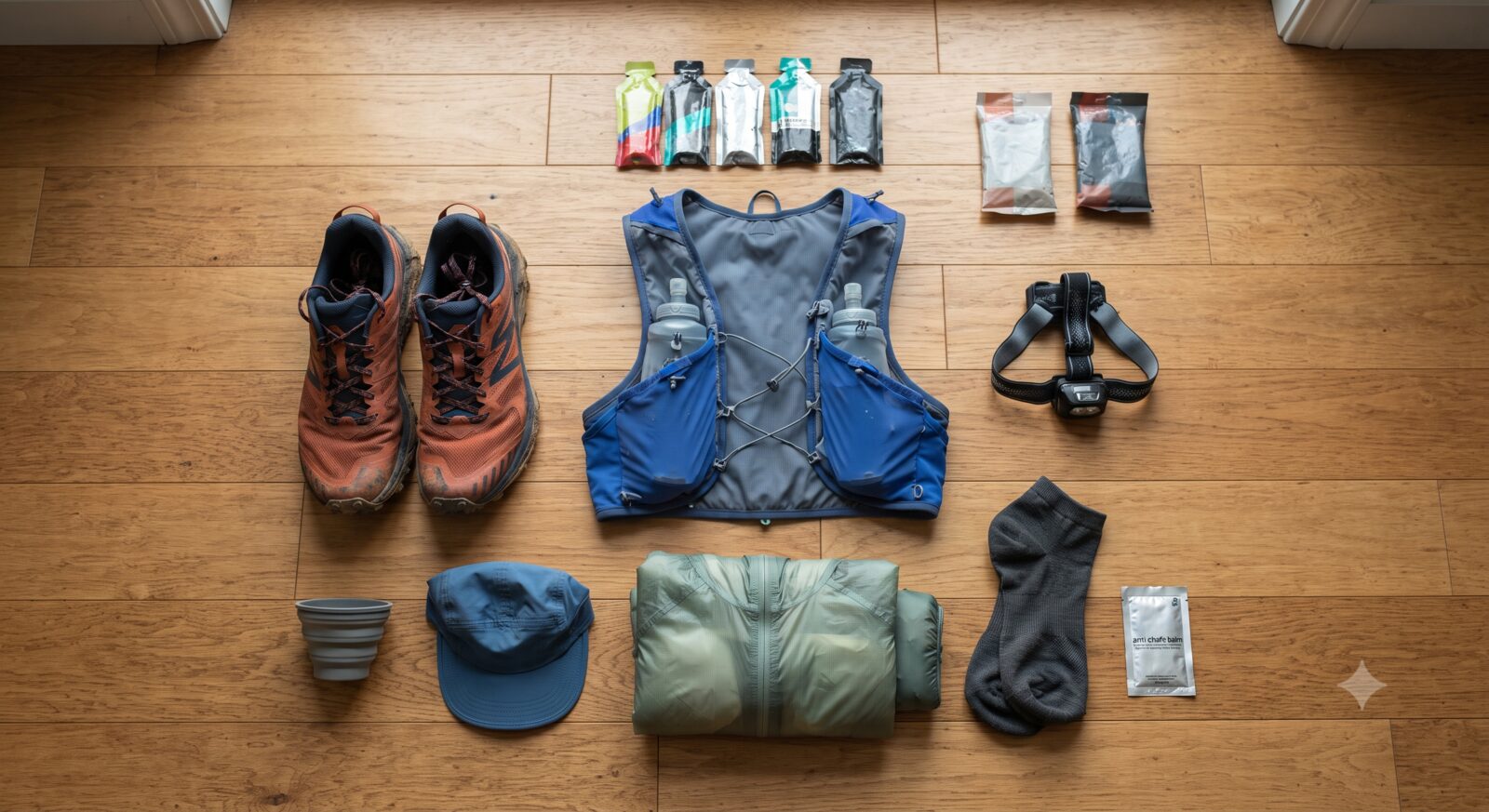
- Properly broken-in shoes — never anything new on race day, no matter how good it looked in the store.
- A hydration system you’ve actually trained with, not one you’re trying for the first time.
- A headlamp with genuinely fresh batteries and a backup, since most hundred-milers involve running through at least one night.
- Blister prevention supplies — tape, lubricant, whatever you’ve tested and trust from training.
The Underrated Item: Good Headphones
Hours eighteen through twenty-four are where morale matters more than anything technical. A genuinely comfortable, sweat-resistant pair of headphones that won’t fail you in the middle of the night, on the back half of the course, is worth packing even if you don’t plan to use them the whole way — having the option matters when things get dark, literally and otherwise.
What to Leave Out
Anything you haven’t tested in training has no business in a race-day pack, no matter how good an idea it seems in the days before the race. Race day rewards boring, tested equipment over anything novel.
One more principle worth stating clearly: every item in a race-day pack should have already failed or succeeded for you in training. If you’re packing something “just in case” that you’ve never actually used on a long run, that’s a signal to test it in training first, not on race day.
Frequently Asked Questions
How much should a race-day pack weigh?
As light as possible while still covering genuine necessities — every extra ounce compounds over dozens of miles, which is exactly why untested “just in case” items are worth reconsidering.
Do I need different gear for day versus night sections of the race?
Yes — lighting is the obvious difference, but temperature swings between day and night on long races also often call for layering options you wouldn’t need for a shorter event.
Should I plan my own gear or trust the race’s mandatory gear list?
Follow the mandatory list as a floor, not a ceiling — races specify genuine safety minimums, but your own tested preferences on top of that list are what actually gets you through the race comfortably.