A brutally rocky, top-heavy figure-8 through the Massanutten Mountains of Virginia’s Shenandoah Valley, with roughly 10 short but steep climbs and 18,500 feet of gain — one of the toughest, most technical 100-milers in the East, run without any official medical support.
Quick facts
- Location: Caroline Furnace Lutheran Camp, Fort Valley, VA (near Luray) (start/finish)
- Date: Mid-May annually (2026 edition: May 16–17); start 5:00am Saturday
- Distance: 100 miles, figure-8 loop; 36-hour cutoff
- Website: new.vhtrc.org/races/mmt
- Contact: Via new.vhtrc.org — organized by the Virginia Happy Trails Running Club (VHTRC)
- Registration: First come, first served via the VHTRC entry system, with a waitlist once full.
Course description
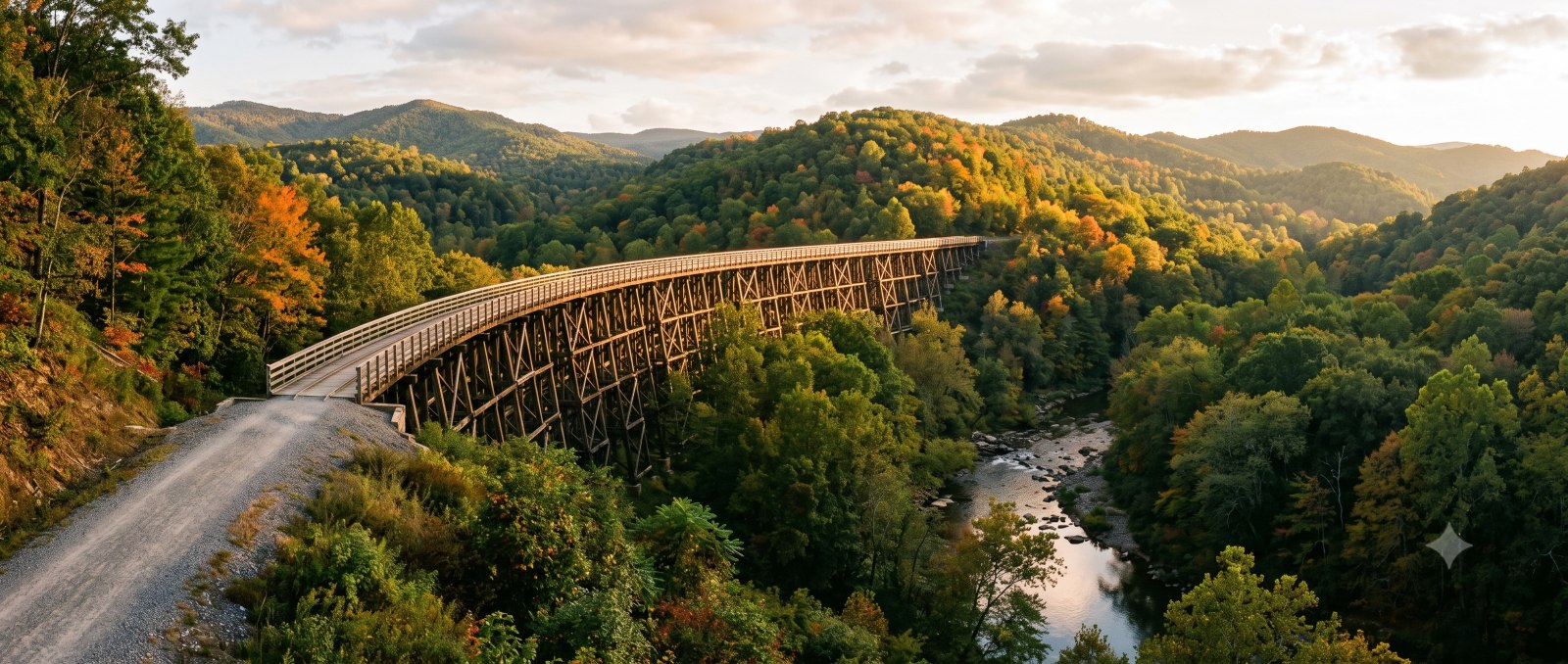
Starting and finishing at Caroline Furnace Lutheran Camp, the course traces the ridges of the Massanutten Mountains in a shape best described as a top-heavy figure-8. The first loop heads north up the western ridge to Elizabeth Furnace (Aid Station 5, mile 33.3), then climbs the eastern ridge and follows it south, with periodic descents to aid stations, down to Gap Creek I (Aid Station 11, mile 69.6) before completing the second loop back to the start. The terrain is short but rugged — around 10 climbs of 750 vertical feet or more, none especially long, but consistently steep, with a rocky ridgeline waiting at the top of nearly every one. The high point is Bird Knob at 2,835 feet (mile 81); the low point is 540 feet between Shawl Gap and Veach Gap (mile 39). The longest single climb, 1,550 feet in 2.5 miles, comes at mile 55 just after Habron Gap. The race provides enough aid support that a crew isn’t required, though crews are welcome under the posted rules.
Elevation change
Over 18,500 feet of cumulative climb across the figure-8 — persistent, technical, rock-strewn terrain rather than a handful of long grinds, which is a large part of what makes MMT one of the most demanding Eastern 100-milers relative to its modest overall elevation range.
Aid stations
Aid stations are spaced roughly every 5-8 miles along the ridge, color-coded by crew accessibility, with drop bags permitted at select stations. The race is explicit that there are no medical checks or medical professionals on course — runners are responsible for their own health and well-being, and should read the race’s medical policy before entering.
Special conditions & average temps
Mid-May in the Shenandoah Valley typically brings mild days and cool nights, though the exposed ridgelines can turn hot in direct sun and cold overnight. All finishers receive an engraved belt buckle — silver for sub-24-hour finishers, pewter otherwise — presented at the finish line, with an optional name/date/time engraving available. Runners completing the course without crew or pacer may register for the Solo Division at packet pickup.
Recent results — top 3, men & women
2026
- Men: 1. Andrew Simpson 18:26:17 · 2. Graham Strzelecki 20:54:39 · 3. Derek Prosser 21:58:52
- Women: 1. Cali Janulis 23:35:34 · 2. Nora Jodrey 23:48:58 · 3. Sheila Martin 25:15:02
2025
- Men: 1. Nicholas Wirz 20:11:23 · 2. Simon Arendt 21:04:26 · 3. James Blandford 21:20:54
- Women: 1. Kristen Kelman 24:47:00 · 2. Amanda Presgraves 26:43:12 · 3. Sheila Martin 27:23:31
2024
- Men: 1. Stephen Knight 20:59:05 · 2. Michael Hiestand 21:31:32 · 3. Chris Baumer 22:00:54
- Women: 1. Justyna Wilson 23:22:33 · 2. Sarah Colwell 25:03:44 · 3. Beth Bauer 26:02:42
Registration deadline & how to get in
Registration is first come, first served through the VHTRC entry system rather than a lottery; once the field fills, runners may join a waitlist. No formal qualifying race is required, but the rocky, technical terrain and total absence of on-course medical support mean this is not considered a beginner-friendly first 100.