
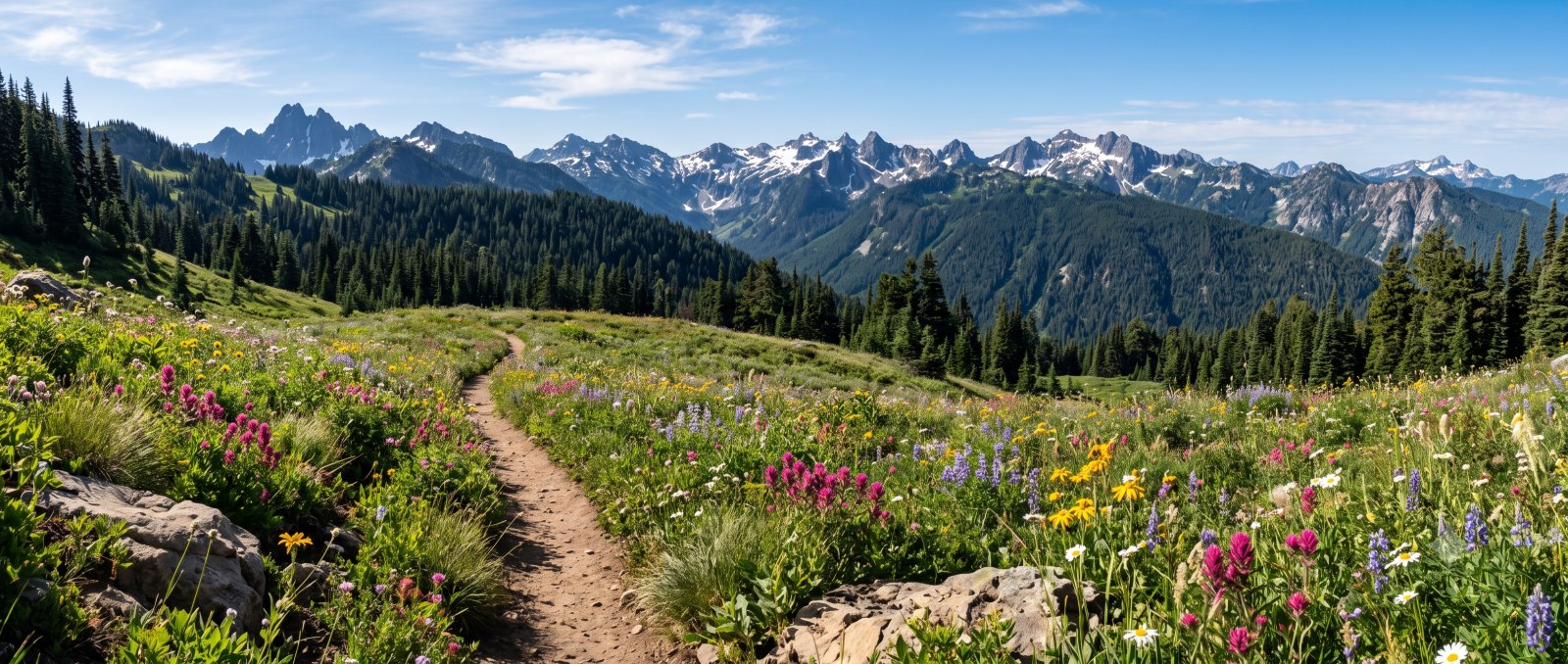
“The Plain 100, Just Plain Tough.” No course markings. No aid stations. No pacers. Two unmarked loops through the Wenatchee National Forest of the eastern North Cascades, navigated entirely with a map, compass, and self-sufficiency — widely ranked among the hardest endurance races in the world.
Quick facts
- Location: Plain, WA (start/finish)
- Date: September 19, 2026
- Distance: Roughly 100 miles, two unmarked lollipop loops with one resupply at the halfway point
- Website: plain100.com
- Contact: Via plain100.com — organized by NW Ultras, founded by Tom Ripley and Chris Ralph in 1997
- Registration: Via UltraSignup. Entrants must have completed a prior trail 100-miler or the Plain 100K to enter the 100-mile distance.
Course description
Plain 100 is composed of two loops of trail within the Wenatchee National Forest — roughly 85 miles of trail and 20 miles of forest service road, entirely remote — with a resupply allowed at the halfway point as runners pass back through the start/finish. While out on the loops, runners are completely self-supported: there are no course markings, no aid stations, and no pacers. Fellow runners may help each other, but muling gear, food, or water for another runner is against the rules. Even experienced, previous finishers have gotten lost on course due to confusion and fatigue. Safety checkpoints staffed by Search and Rescue teams track runners through the route. Founded in 1997 by Tom Ripley and Chris Ralph in the spirit of expedition-style events like the Yukon Arctic Ultra and Marathon des Sables, the race went without a single finisher in several of its early years — even the four runners who toed the line the first year all failed to complete it.
Elevation change
Approximately 21,000 feet of cumulative elevation gain across the two loops, over genuinely rugged, off-the-beaten-path North Cascades terrain — made significantly harder by the total absence of course markings or trail-finding assistance.
Aid stations
None, by design. Runners are entirely self-supported apart from one resupply opportunity at the halfway point back at the start/finish. Six safety checkpoints staffed by Search and Rescue teams provide tracking and monitoring, but no food, water, or course guidance.
Special conditions & average temps
Mid-September in the eastern North Cascades typically brings cool, crisp days and cold nights, with real risk of early snow at elevation. The race has been canceled outright in multiple years due to nearby wildfires (2003, 2015, 2018, and most recently 2025) as well as the 2020 and 2022 seasons. Runner’s World and Outside have both named it among the most brutal races in the world. In the race’s first eight years, there were only four total finishers; roughly half the field finishes in recent years, still a low rate by 100-mile standards.
Recent results — top 3, men & women
The 2025 race was canceled due to wildfire; the years below are the three most recent completed runnings.
2024
- Men: 1. Jeremy Douglas 23:46:00 · 2. Tomokazu Ihara 25:54:00 · 3. Steve Slaby & Anthony Lee (tied) 26:15:00
- Women: 1. Christine Mosley 28:43:00 · 2. Christie Allemand 30:19:00 · 3. Katie Brown 33:30:00
2023
- Men: 1. Patrick McAuliffe 25:47:00 · 2. Loic Gourmel 25:56:00 · 3. Brett Maune 26:25:00
- Women: 1. Gina Slaby 29:53:00 · 2. Jennifer Schwegler 31:54:00 (only 2 women finished)
2021
- Men: 1. Luke Nelson 28:13:00 · 2. Nicholas Potter 29:28:00 · 3. Ryan McKnight 29:50:00
- Women: 1. Rachel Entrekin 27:46:00 (overall winner; only woman finisher)
Registration deadline & how to get in
Registration is handled through UltraSignup; check plain100.com for the current year’s opening date. Entry to the 100-mile distance requires a prior finish at a trail 100-miler or at the Plain 100K itself — this is explicitly not a race for a first ultra, let alone a first 100.